Fit People Experience Time Differently During Exercise
That four-minute interval doesn't last four minutes—not in your head. Exercise distorts time perception in ways that depend on intensity, fitness level, and what your brain is paying attention to. The research explains a lot about why hard workouts feel eternal and easy runs vanish.
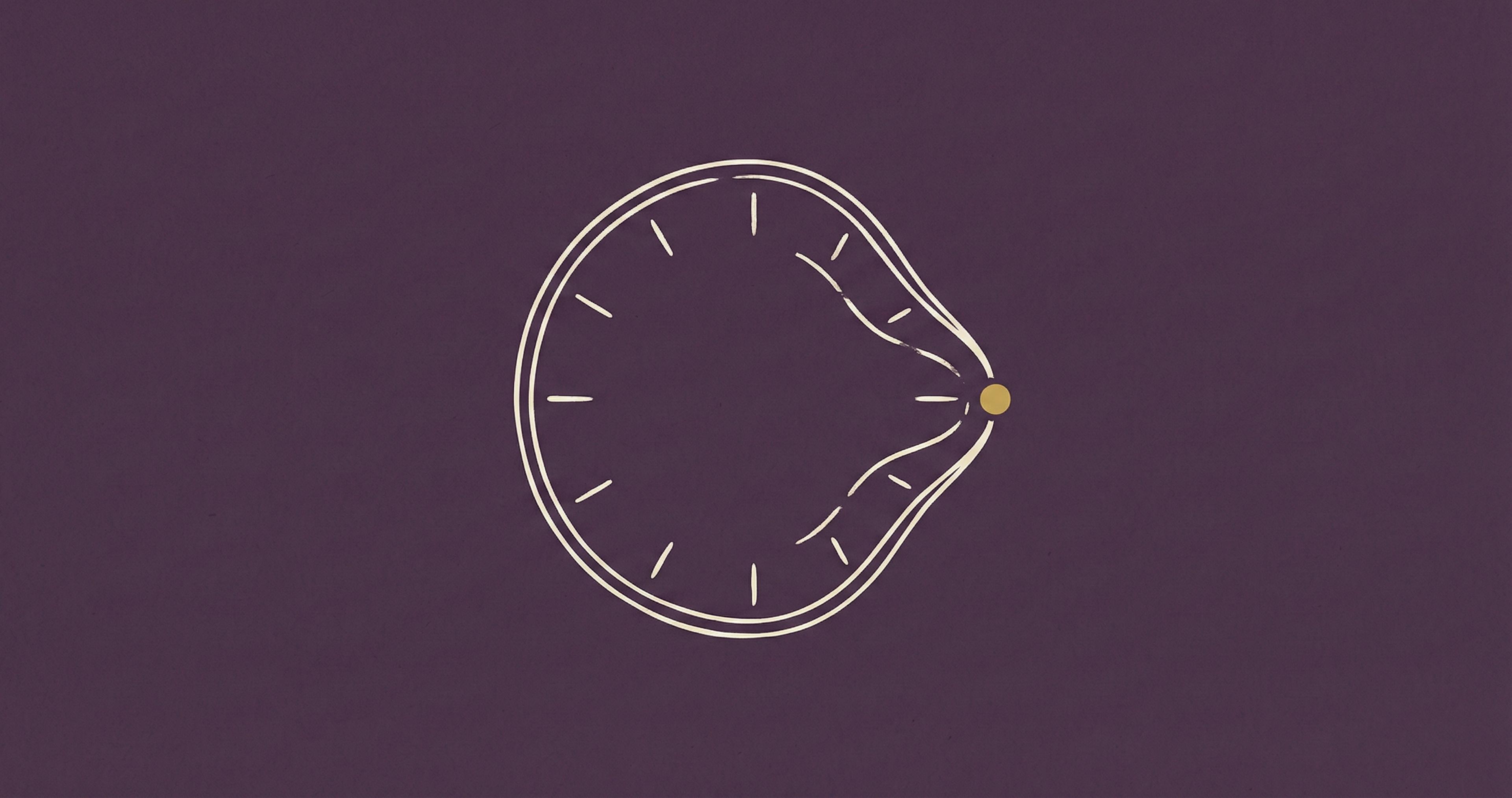
Last Tuesday I ran two workouts back to back. The first was a 40-minute Zone 2 jog at 135 bpm. It evaporated. I was listening to a podcast about the Roman Republic and genuinely startled when my watch buzzed at the end. The second was a 4×4 interval session: four minutes at 90% of max heart rate, three minutes recovery, repeated four times. Sixteen minutes of hard work. It felt like forty.
Same afternoon. Same legs. Same park. But the clock moved at completely different speeds.
I'd always assumed this was just psychological, the predictable result of suffering through something unpleasant. But when I started reading the research, I found that exercise literally warps your brain's perception of time, and the magnitude of that warping depends on how hard you're working, how fit you are, and what your attention is doing. The implications for training are more practical than you'd expect.
The first study that proved time bends during exercise
Until 2017, nobody had actually tested whether exercise intensity changes how people perceive time. It seems like an obvious question, but the research simply didn't exist.
Edwards and McCormick fixed that. They had 12 recreationally active adults perform both 30-second Wingate cycling sprints and 20-minute rowing bouts at three different intensities: light effort (RPE 11), heavy effort (RPE 15), and maximal effort (RPE 20). At regular intervals during each bout, participants estimated how much time had elapsed.
The results were clear. At maximal intensity, participants consistently underestimated how much time had passed. Three minutes felt like two. Five minutes felt like three. The harder the effort, the more time seemed to slow down. During the rowing test, the maximal-effort condition produced significantly shorter time estimates at the 75% and 100% mark compared to both lighter conditions (P = 0.04 and P = 0.008, respectively).
This was the first empirical demonstration that exercise intensity distorts temporal perception. Worth noting: the sample was 12 people, all recreationally active, so the findings are specific to that population. But the pattern has since been replicated in multiple studies, making the core observation fairly robust.
Why hard efforts feel like they last forever
The mechanism behind this is genuinely interesting. Your brain has an internal timekeeping system that researchers model as a kind of pacemaker-accumulator. The "pacemaker" generates pulses at a steady rate. The "accumulator" counts them. More pulses counted in a given period makes that period feel longer.
When you're exercising hard, your sympathetic nervous system goes into overdrive. Catecholamines surge. Your body enters a state of hyperarousal that researchers compare to the fight-or-flight response. In that state, your brain processes more sensory information per unit of time. Every heartbeat, every breath, every signal from your burning quadriceps registers as a discrete event. The accumulator fills faster. A minute packed with 200 distinct sensations feels longer than a minute containing 50.
A comprehensive review in Frontiers in Physiology laid out the science: during high-intensity exercise, greater sensory awareness of physical discomfort creates a multiplicative effect on temporal perception. Experiences get densely packed into each moment. The researchers drew an analogy to dangerous incidents where survivors report events unfolding "in slow motion." The same neural machinery is at work.
This reframes something I used to find frustrating about Zone 4 intervals. Minute three of a four-minute effort at 170 bpm doesn't just feel hard. It feels long. Not because I'm weak or because time is objectively different, but because my brain is processing an extraordinary amount of internal sensory data. Each second arrives loaded with information. The accumulator overflows.
The flip side: why easy runs disappear
A 2024 study published in Brain and Behavior added an important wrinkle. Edwards and colleagues had 33 recreationally active adults complete 4-km self-paced cycling trials while periodically estimating elapsed time. They found that time was perceived to move slower during exercise regardless of intensity. Even moderate efforts distorted temporal perception compared to rest.
But the degree of distortion scaled with intensity. This maps perfectly to what I experience during training. A Zone 2 session at conversational pace creates mild temporal compression: thirty minutes feels like twenty-five. An interval session at 90% of max heart rate creates severe compression: four minutes feels like seven.
The practical consequence is that easy aerobic work, the kind that makes up 80% of a polarized training plan, is far more psychologically sustainable than hard efforts. Not just because it hurts less, but because time literally passes faster when your intensity is lower. This might partially explain why the 80/20 model has such good adherence compared to programs that pile on high-intensity work. Most of your training week takes place in a temporal zone where minutes slip by without much friction.
Fitness level changes the equation
Here's the piece that made me rethink how I approach training. The same review noted that highly trained athletes appear to perceive time more accurately during exercise than untrained individuals. The proposed mechanism isn't that elite athletes have superior internal clocks. It's that they have superior "task duration knowledge," a form of calibration that comes from years of repeated exposure to specific efforts and durations.
An elite swimmer who has done ten thousand 100-meter repeats has an exquisitely tuned sense of what 60 seconds feels like at race pace. Their brain has been calibrated by thousands of data points. A recreational runner doing their third-ever interval session has no such calibration. Their brain overreacts to the novelty and intensity, flooding the accumulator with undifferentiated alarm signals.
This connects to something I wrote about regarding the internal negotiation during hard intervals. Part of what makes early interval training so mentally grueling isn't just the effort. It's the temporal distortion. When four minutes feels like eight, your brain's cost-benefit analysis shifts dramatically. The perceived cost of continuing doubles because the perceived time remaining doubles. That voice telling you to stop isn't just reacting to how hard the effort is. It's reacting to how long the effort seems.
As you get fitter and more experienced, two things happen simultaneously. First, the same absolute workload produces less physiological stress, which means less hyperarousal and less temporal distortion. A pace that put you at 92% of max heart rate six months ago might only hit 85% now, because your VO₂ max has improved. Second, your brain develops better temporal calibration for the specific demands of your training. Four minutes at threshold starts to feel like four minutes, not seven.
Both of these changes make training more sustainable over time. The intervals don't necessarily get easier in absolute terms, because you keep pushing the intensity upward. But they become more temporally honest. Your subjective experience of duration starts matching the clock, which removes a hidden source of psychological friction.
What happens after you stop
Tonelli and colleagues published a study in Frontiers in Psychology that found something I didn't expect. They had participants estimate the duration of visual stimuli before, during, and after moderate cycling. Physical activity induced a robust overestimation of perceived time in the sub-second range, between 200 and 800 milliseconds. People consistently felt that brief intervals lasted longer than they actually did.
The part that surprised me: the effect persisted for 15 to 20 minutes after exercise ended, even after heart rate had returned to baseline. This rules out a simple arousal explanation. If it were just about elevated heart rate or catecholamines, the distortion should vanish when those return to normal. Something deeper in the neural timing circuitry gets temporarily recalibrated by physical activity. The researchers speculated that exercise may modulate dopaminergic pathways or GABAergic inhibition in ways that alter the pacemaker's tick rate.
From a practical standpoint, this means the "time warp" effect of a hard workout extends into your post-exercise life. That strange feeling after a long run where you sit down and twenty minutes vanishes? It's not just relaxation or distraction. Your brain's clock is still running at a different speed.
Music, attention, and the escape hatch
If exercise slows down perceived time, and that slowing makes workouts feel harder and longer, is there anything that speeds it back up?
A recent study tested whether music could counteract the temporal distortion of exercise. Participants with negative exercise attitudes ran under three conditions: no sound, white noise, and encouraging music. The music condition significantly reduced the overestimation of running duration. The researchers attributed this to music occupying attentional resources that would otherwise be devoted to monitoring internal discomfort.
This aligns with what I've found personally and what the broader music-and-exercise research shows: audio stimulation during lower-intensity work isn't just pleasant. It functionally shortens the workout by reducing the brain's tendency to dilate time through excessive interoceptive monitoring. Your attention shifts from counting heartbeats to following a melody, and the accumulator fills more slowly.
The effect has limits. At very high intensities, above roughly 75% of VO₂ max, physiological signals from your muscles and cardiovascular system overwhelm external distractions. Music can't mask the experience of Zone 4 work at 90% of max heart rate. But for the Zone 2 sessions that make up the bulk of a well-designed training week, the temporal benefit of music or an engaging podcast is real and measurable.
What this means for training design
Understanding time perception during exercise changes how I think about structuring a training week. A few things that follow from the research:
The reason Zone 2 training feels sustainable for long periods isn't only physiological. It's perceptual. Time compresses less at lower intensities, making a 60-minute easy run feel closer to 45 minutes subjectively. This has real implications for adherence. If you're struggling with exercise dropout, the temporal comfort of easy effort might matter as much as the physical comfort.
Intervals feel disproportionately long because they are, in your subjective experience. Knowing this helps. When minute two of a four-minute interval feels like it's been going on forever, that's not a sign you need to stop. It's your pacemaker-accumulator doing what it does under high arousal. The clock says two minutes. Trust the clock.
As your VO₂ max improves, the same workout will feel shorter. Not just because you're fitter, but because the reduced relative intensity produces less temporal distortion. This is one of those compounding benefits of cardiovascular fitness that doesn't show up in any metric but profoundly affects how training feels day to day.
Recovery days might also benefit from understanding this. If the temporal effects of hard exercise persist for 15 to 20 minutes post-workout, the subjective experience of your cooldown and immediate recovery period is still being filtered through a distorted clock. This isn't actionable in any specific way, but it's worth knowing that the "timeless" quality of a good cooldown isn't just relaxation. It's a measurable neurological aftereffect.
The deeper observation
What I find most interesting about this research is what it reveals about the relationship between fitness and subjective experience. We usually talk about VO₂ max in terms of longevity data, mortality risk reduction, cardiovascular efficiency. Those are the measurable, citable benefits. But there's a parallel track of benefit that's harder to quantify: as your fitness improves, the experience of being in your body during physical effort changes. Not just in how hard things feel, but in how long they feel.
A 35-year-old who has spent six months building from a VO₂ max of 38 to 44 hasn't just reduced their mortality risk. They've recalibrated their brain's relationship with physical effort and time. The workout that used to feel like it would never end now passes at something closer to real speed. The confidence that carries into daily life comes partly from this: a growing sense that discomfort is survivable and, crucially, temporary.
Every interval you complete is a small lesson in temporal honesty. Your brain learns that the four minutes it swore was seven actually was four. That recalibration doesn't stay on the track. It shows up everywhere your brain has to tolerate something unpleasant and uncertain, which, if you're paying attention, is most of life.
Track your VO₂ max over time with VO2 Max Pro. The app syncs with Apple Health, notifies you when your Apple Watch records new readings, and translates your number into a biological age so you can see what your training is building toward.
Compare Your Score
Enter your stats to see how you compare
Find yours: Apple Health → Browse → Heart → Cardio Fitness